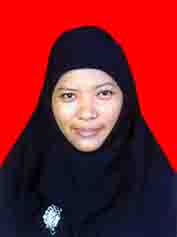
I was born in Banda Aceh in 1974 to a middle-class family. I completed my primary and secondary education in my hometown, Banda Aceh. Afterward, I continued my education at the Faculty of Medicine, Gadjah Mada University, and graduated in 2001. At that time, Aceh was in the middle of an armed conflict between the Free Aceh Movement and the Indonesian Army, and Aceh lacked general practitioners. Therefore, I decided to return to the area and serve my community in a rural health center in the Aceh Besar district, which was one of the ‘red spot’ areas in the conflict. I enjoyed my assignment there. It gave me an insight into how a community can survive the predicaments during a man-made disaster. At the end of 2004, a tsunami hit the area, and I was pregnant with my second child but survived the disaster with the help of my community. Although initially, I ignored their guidance to run away from the giant waves, they insisted I run in the right direction. Therefore, I felt I owed so much to them and was responsible for paying them back. When I pursued a master's degree education, I chose to enroll in the Master of Health Profession Education at Maastricht University, The Netherlands, and my master's thesis explored the “Designing a Disaster Management course for the Faculty of Medicine” and graduated in 2011. In 2015, I proceeded with my doctoral-level education at The University of Sydney, Australia, and incorporated the idea of listening to disaster-affected communities in my PhD thesis. I completed my ethnographic research on doctor-patient interactions in four disaster-affected districts in Banda Aceh and completed my dissertation in August 2020.
| 1 | Local cultures, feeding practices, and children with stunting in Aceh, Indonesia: An ethnographic study |
| 2 | “Just give her a banana”: An ethnographic exploration of causes of stunting in Aceh, Indonesia |
| 3 | Willingness to Pay (WTP) for COVID-19 Vaccine Booster Dose and Its Determinants in Indonesia |
| 4 | Drivers of and Barriers to COVID-19 Vaccine Booster Dose Acceptance in Indonesia |
| 5 | QUALITATIVE INTERVIEW WITH SENSITIVE PARTIPANTS |
| 6 | Bukan Jahit Sepatu!: Sebuah Penelitian Etnografi Tentang Interaksi Mahasiswa Kedokteran Dengan Pasien di Daerah Pascabencana |
| 7 | Mencari Penawar Orientalisme pada Pendidikan Dokter Di Aceh |
| 8 | Promosi kesehatan dalam Berbagai Perspektif |
| 9 | Teori Postcolonial dan Aplikasinya dalam Komunikasi Kesehatan |
| 10 | COMMUNICATION SKILLS: FACILITATING STUDENTS’INVISIBLE BUT SIGNIFICANT SKILLS TO IMPROVE HEALTH OUTCOMES |
| 11 | Valuing subaltern and grieving patients: Power issues in doctor-patient interactions in post-disaster Aceh, Indonesia |
| 12 | Coding untuk menganalisis data pada penelitian kualitatif di bidang kesehatan |
| 13 | Freire, dialogic feedback, and power issues: An authoethnography |
| 14 | Community-based medical education: Exploring doctor-patient interactions in post-disaster Aceh, Indonesia |
| 15 | Studi di Tiga Benua: Kisah-kisah Inspiratif Kuliah di Luar Negeri |
| 16 | Knowledge towards Zika among medical students, interns and general practitioners in Indonesia: A cross-sectional study in Aceh |
| 17 | Knowledge and attitude towards pregnancy-related issues of Zika virus infection among general practitioners in Indonesia |
| 18 | Insider Dilemmas: An Ethnographic Study on Community-Based Medical Education in Aceh, Indonesia |
| 19 | Insider Dilemmas |
| 20 | Probing problems: Dilemmas of conducting an ethnographic study in a disaster-affected area |
| 21 | Studi pengetahuan, sikap dan perilaku masyarakat Aceh dalam pencegahan demam berdarah dengue (KAP study on dengue prevention in Aceh) |
| 22 | Studi Pengetahuan, Sikap dan Perilaku Masyarakat Aceh dalam pencegahan demam berdarah dengue |
| 23 | Designing Disaster Management Course for Medical School in Disaster-Prone Area |
| 24 | PERBEDAAN SUBSTRAT DAN DISTRIBUSI JENIS MANGROVE (STUDI KASUS : HUTAN MANGROVE DI KOTA TARAKAN) |
| 25 | Manfaat Bermain Peran pada Mata Kuliah PendidikanAgama Islam bagi Mahasiswa Ilmu Keperawatan Berbasis Kompetensi Perawat Muslim |
| 26 | Transition from Conventional Curriculum to Problem-Based Learning at Faculty Of Medicine, Syiah Kuala University: Lessons Learned |
| 27 | Urgensi pendidikan kesehatan reproduksi (Tinjauan medis, budaya dan agama) |
| 28 | Manfaat penilaian mahasiswa terhadap tutor |
| 1 | Medical doctors and community engagement in the aftermath of a disaster |
| 2 | Communityâs knowledge, attitude, and misperception towards COVID-19: a future demand to prevent advanced wave of pandemic |
| 3 | Community’s knowledge, attitude, and misperception towards COVID-19: a future demand to prevent advanced wave of pandemic |
| 4 | âMonster VIPsâ: disaster preparedness training for children with intellectual disabilities |
| 5 | “Monster VIPs”: disaster preparedness training for children with intellectual disabilities |
| 6 | Analysis on the quality of test items on disaster management block |
| 7 | Designing Disaster Management Course for Medical School in Disaster-Prone Area |
| 8 | Studi pengetahuan, sikap dan perilaku masyarakat Aceh dalam pencegahan demam berdarah dengue (KAP study on dengue prevention in Aceh) |
| 9 | Designing Disaster Management Course for Medical School in Disaster-Prone Area |
| 1 | Mencari Penawar Orientalisme pada Pendidikan Dokter di Aceh (dalam |
| 2 | Teori Postcolonial dan Aplikasinya dalam Komunikasi Kesehatan (dalam |
| 3 | Bukan Jahit Sepatu! : Sebuah Penelitian Etnografi Tentang Interaksi Mahasiswa Kedokteran Dengan Pasien di Daerah Pascabencana |
| 4 | Studi di Tiga Benua |
| 1 | The University of Sydney High Degree Research Student Grant |
| 2 | The University of Sydney High Degree Research Student Grant |
| 3 | Runner up in the Three Minute Thesis Competition |
| 4 | Doctoral Research Grant |